The NeXSYS Platform
From framing system to integrated construction platform - a revolutionary approach that transforms how buildings are designed, manufactured, and assembled.
A Unified Platform for Industrialization Construction
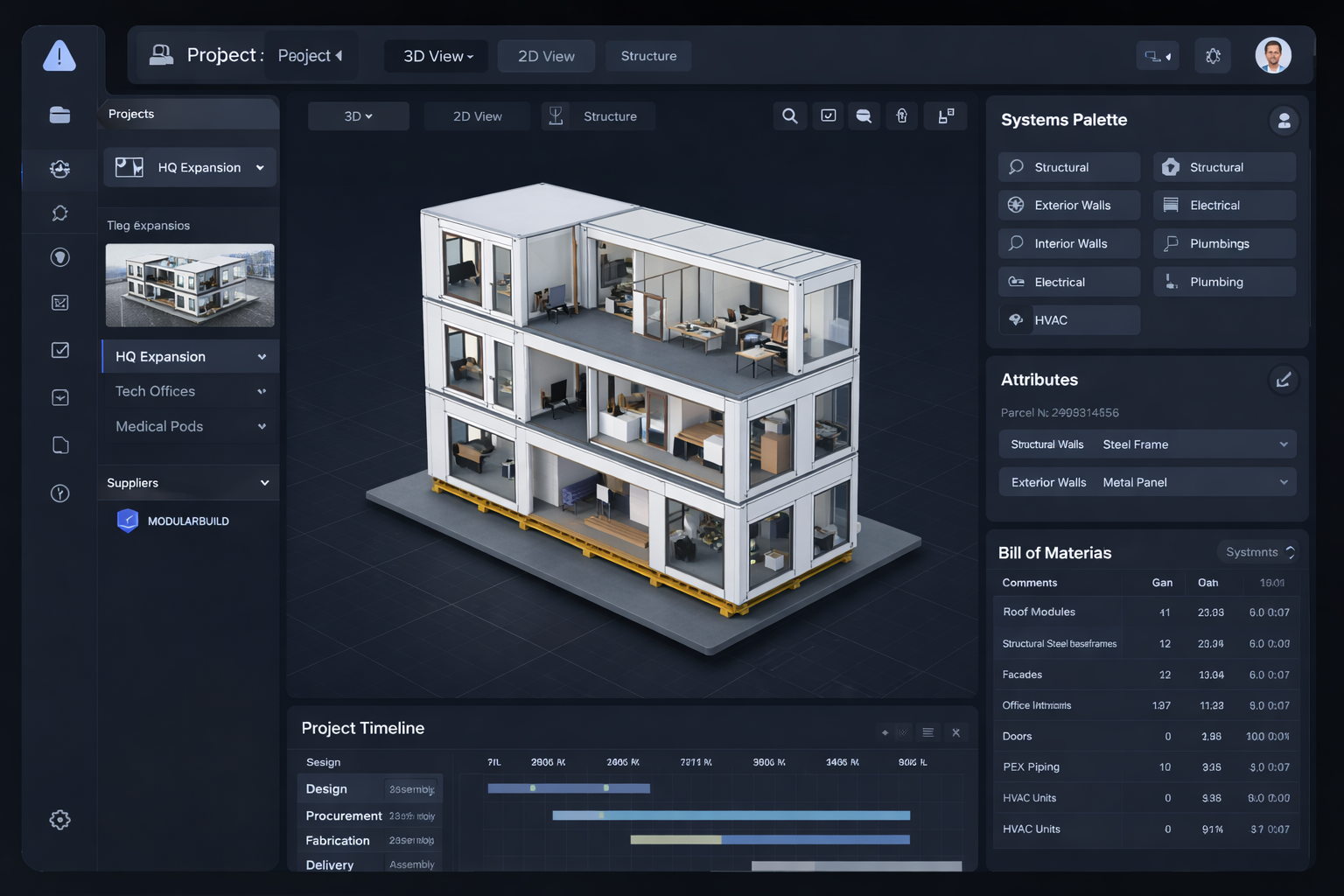
The NeXSYS Platform is a unified construction ecosystem built around the NeXSYS Frame System - a precision-engineered, standardized node-and-beam structure that forms the primary load-bearing framework of the building. Designed as a common structural language, the frame enables seamless integration with MEP systems, façades, flooring, roofing, fenestration, fire and life-safety systems, and interior finishes while maintaining architectural flexibility, speed, and dimensional certainty.
The platform is powered by NeXSYS's internally developed Design-for-Manufacturing (DFM) software, which connects architectural and engineering design directly to production and assembly. Manufacturing logic, tolerances, sequencing, and code compliance are embedded from the outset, enabling factory-ready outputs and reducing coordination risk between design intent and execution.
Supporting the system is a globally aligned supply chain of approved partners whose products are validated for compatibility with the NeXSYS Frame System. Fabrication and assembly are delivered through certified manufacturers and installation partners, ensuring consistent quality and repeatable outcomes across regions. Projects are designed and coordinated by approved architects, engineers, and consultants trained to operate within the NeXSYS ecosystem, ensuring alignment from concept through delivery.
Together, these elements form a scalable, governed platform that transforms construction from a fragmented process into an integrated, industrialized system.
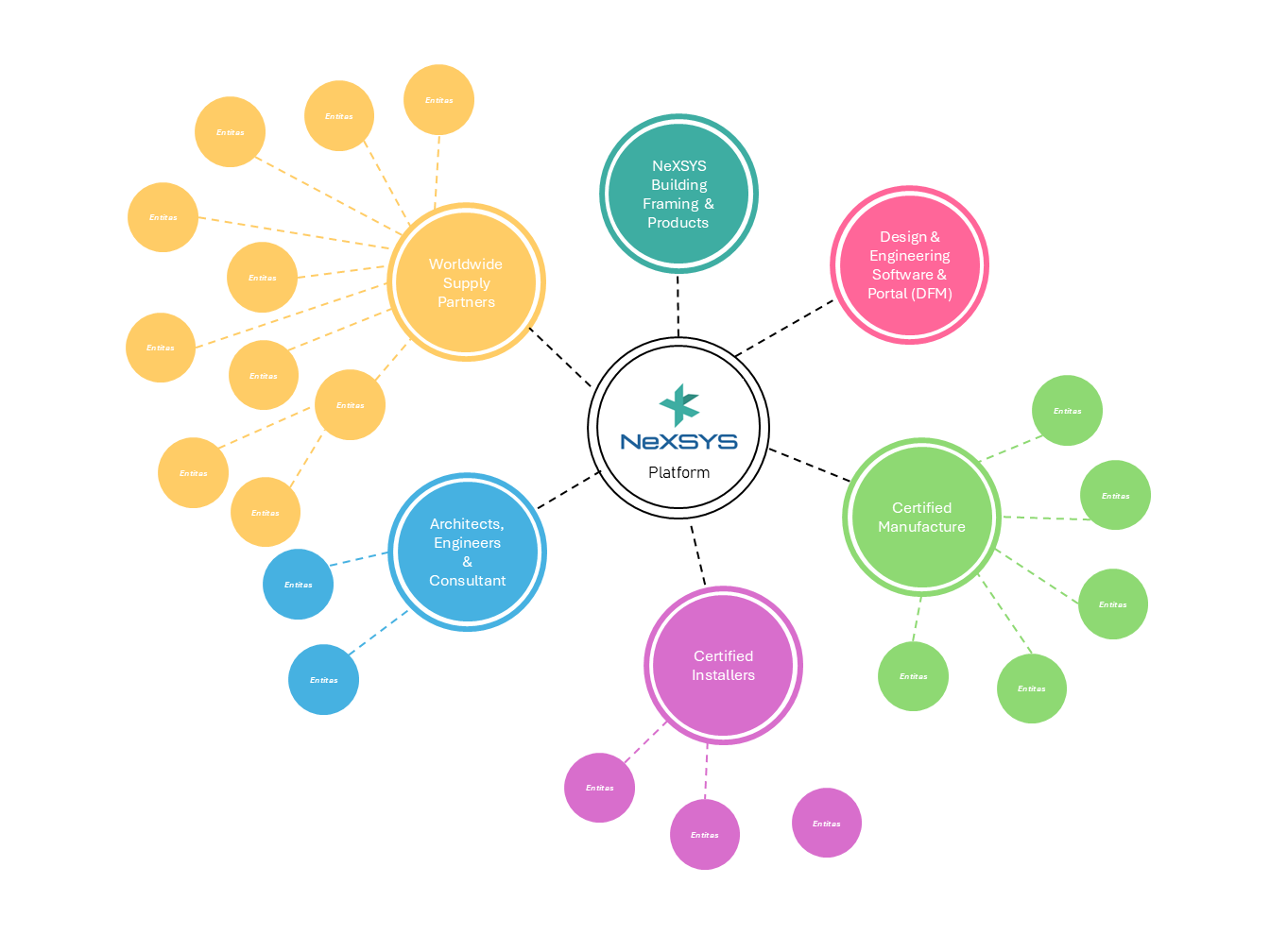
NeXSYS Platform Concept
Benefits for All Stakeholders
The NeXSYS platform creates value across the entire construction ecosystem.
For Developers
 Unified Structured Process from Design to Hand over
- Faster Design & Engineering Phase
- Predictable costs with standardized systems
- Decreasing RISKs and Increase in Quality
For Supply Chain
- True Integration into manufacturing process and final product
- Streamlining of procurement
- Systematic Material Approval & Specifications
- Penetration into New Segment through Partnership
For Manufacturers
- Reduction of Fabrication cost
- Production capability licensing
- Standardized component specifications
- Quality assurance protocols while allowing for High-volume production
For Contractors
- Ease of onsite Installation by Contractor
- Access to Supply chain and Installers
- Predictable project timelines
- Lower construction risk, skill labor and increase predictability
Join the Platform
Partner with NeXSYS to revolutionize the construction industry.
Professional Services
We collaborate with architects, structural engineers, MEP engineers, and consultants trained in the NeXSYS system to deliver rapid, high-quality project outcomes.
Learn moreChannel Partners
Become a licensed user, wholesaler, producer, or manufacturer authorised to use, distribute, or produce NeXSYS systems in your market.
Learn moreSupply Chain Partners
Material suppliers, MEP equipment providers, and logistics partners who integrate seamlessly into the NeXSYS manufacturing and delivery ecosystem.
Learn moreInstallers & Setters
Certified site installers and finishers trained to assemble, install, and complete NeXSYS buildings to the highest quality and safety standards.
Learn more